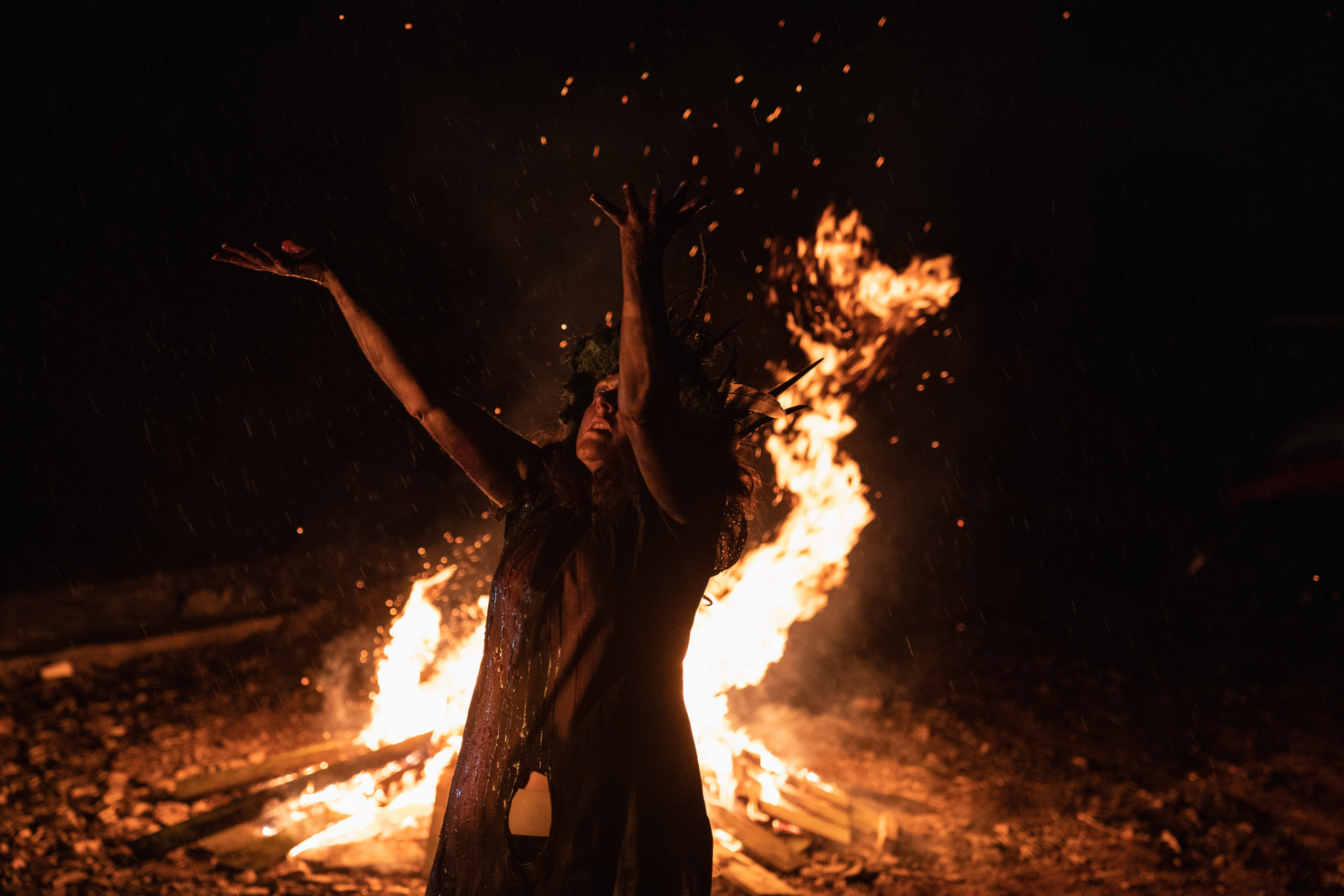
“Probation officer Cathy Madden is given the task of rehabilitating notorious killer ‘Bloody’ Mary Laidlaw back into society after she was imprisoned 20 years earlier for butchering her husband with an axe. Cathy has always believed that every client deserves a shot at redemption, but her beliefs are firmly tested when two children disappear near Mary’s farm, and she discovers the legend of ‘The Wandering Man’.” (Official)
You can’t really seem to do an online search for horror films without coming across a new folk horror title in the works or generating some buzz. However, the appeal here is obvious as it is a medium to explore some primordial fears built into centuries of superstition and attempting to understand the world.
Folk horror is one of the few genres whose existence straddles both familiarity and the unknown. Furthermore, the sub-genre has proven to stand out as having a unique track record of producing more favorable productions over flops.
Looking at Lynne Davison’s debut film, Mandrake, it calls to the best of folk horror while adding a strong narrative from two different women’s perspectives. As part of the ‘Women in Film and TV UK’ initiative by Suffragette and Rocks
Stripping away the elements of horror, the focus of the film lies on motherhood and the fears that come with losing one’s child. This can be extended to both probation officer Cathy and the ex-prisoner Mary, with both having lost the identity of motherhood, albeit under drastically different circumstances.
The conflict that arises in Cathy dealing with her own insecurities off of the daunting persona of Mary gives the script a solid foundation to explore the characters. One can even go so far as to evoke some sympathy for Mary, despite her murdering children, as the film shows different extremes of abuse by men and loss of the identity of ‘motherhood’ between two women.
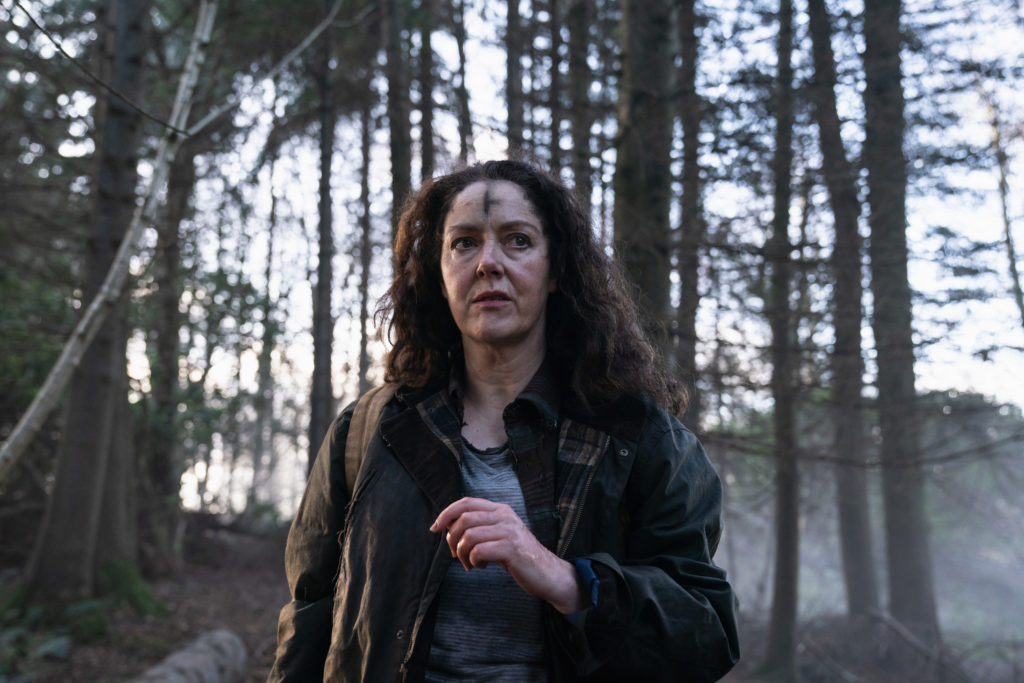
While the horror elements do play a secondary role to the dramatic elements, they are far from lacking. For example, the vision of the ‘wandering man’ skulking the woods looking for victims is bone-chilling, and the ritualistic manner in which dark magic is performed adds to the unsettling presence of the ‘creature’ — who knew children’s blood was such a hot commodity for witchcraft?
For those familiar with the symbology behind the ‘mandrake’ root, the meaning of the plant and its description are apt to the story in dealing with loss. The imagery of the plant when it is first uprooted further elevates the elements of horror.
Visually, the production quality can waiver at times looking wonderfully macabre or beautifully picturesque, while carrying a made-for-TV aesthetic in other moments. It is nothing to deter from the overall experience, yet in a sub-genre that is so notable for its visual presentation audiences are going to be likely to nitpick.
The audio design is complementary yet not overly pronounced or dominant. However, the squelches and dark utterings when practicing dark magic come through perfectly to keep a steady sense of unease in the viewer.
Out of all the positive takeaways of the production, the performances are easily the greatest highlight. Deirdre Mullins and Derbhle Crotty both give inspired performances as Cathy and Mary — both exuding strong, determined personalities that are easy to admire (in Mary’s case also fear). Their scenes together and the way Mary plays off of Cathy’s insecurities add an extra layer of tension that heightens the entire production.
Overall, Mandrake’s greatest hindrance comes through as a slight show of inexperience, there are certainly moments where it could have indulged in richer visuals or disturbing content to greater impact. Looking at stand-outs of the sub-genre it is difficult to champion it over other flawless films that have spoiled fans. However, the film makes up for its stumblings with an intelligent script and unique perspective — still a must-watch even if it lacks that polish.
It will be really exciting to see what Lynne Davison is able to come up with in future films as she continues to grow, for a debut film Mandrake is a very impressive start.

Our Mandrake Film review is courtesy of Bluefinch Releasing, playing as part of Frigthfest Glasgow 2021

More Film Reviews
Dorothea is a 2025 true crime thriller written and directed by Chad Ferrin. Best known for his recent flurry of horror thrillers, Chad is notable for creating Pig Killer (2022),… Dead Sushi is a 2012 Japanese splatter horror comedy film, written and directed by Noboru Iguchi, with additional writing from Makiko Iguchi and Jun Tsugita. Known for his over-the-top implementation… We’re Not Here to Fuck Spiders is a 2020 Australian found footage horror movie written and directed by Josh Reed, who is primarily recognized for his directing work on television… Deep Fear is a 2022 French horror, directed by Grégory Beghin, who has made a name for himself as a TV actor, Grégory made his debut behind the camera with the 2020 comedy Losers… I have spent a significant amount of my tenure with Grimoire of Horror reviewing the latest films of Takashi Shimizu—the man responsible for the sensational Ju-On film series—and although none… After his beloved wife suddenly commits suicide, octogenarian Manuel (Zorion Eguileor) starts behaving strangely and is soon taken into the care of his son, his wife, and their daughter in…
Dorothea (2025) Film Review – Landlady From Hell

Dead Sushi (2012) Film Review – Sushi (S)Platter
We’re Not Here to Fuck Spiders (2020) Film Review – Found Footage from Down Under
Deep Fear (2022) Film Review – I Did “Nazi” That Coming

Sana (2023) Film Review – Nostalgia for the Tartan Asia Extreme Era
The Elderly (2022) Film Review -The Old Make Way for the Young… Right?