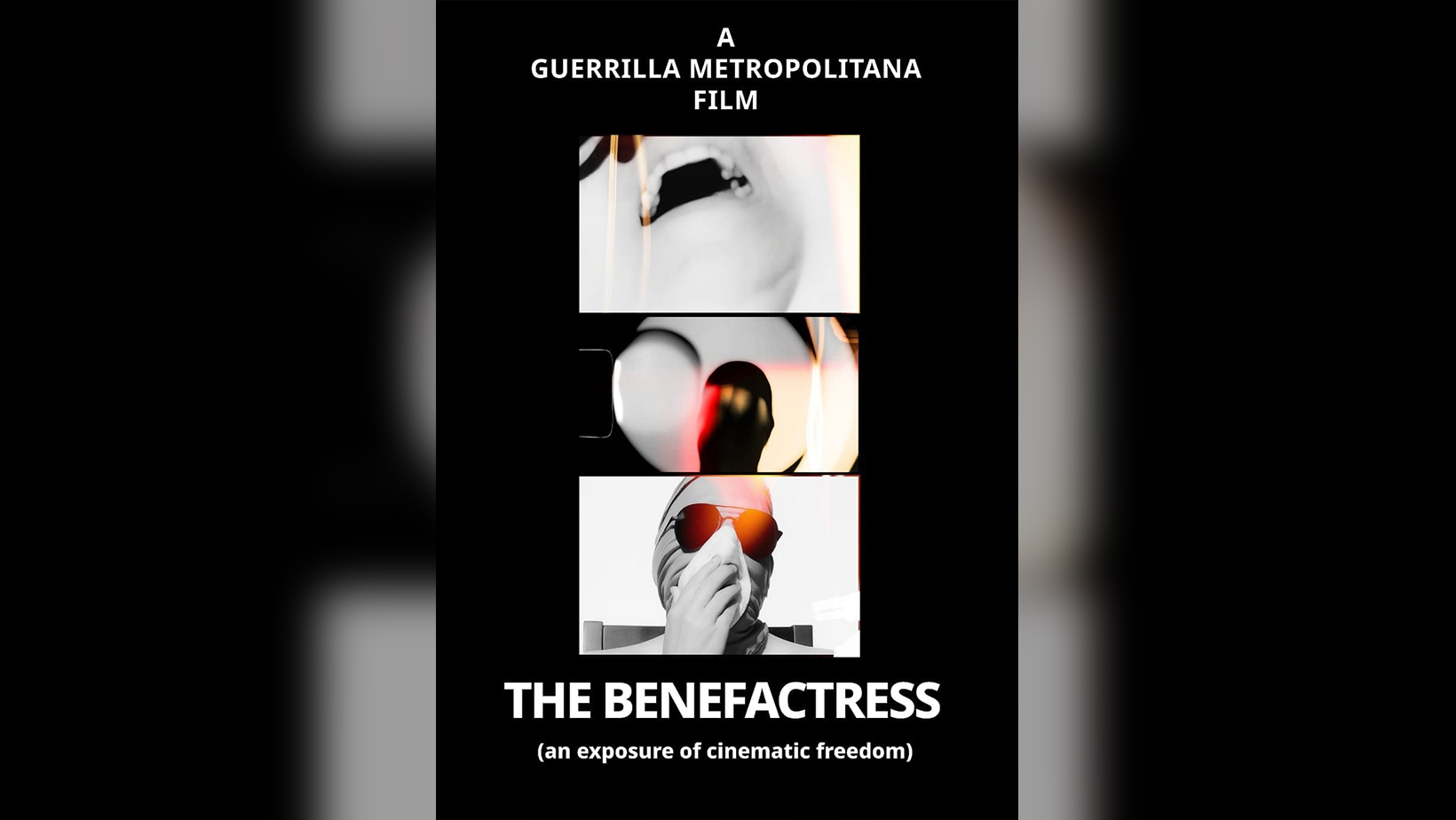





The Benefactress: An Exposure of Cinematic Freedom is a 2025 experimental/extreme horror film written and directed by London-based Italian filmmaker Guerrilla Metropolitana. Known for writing, directing, and starring in his work, Guerrilla is known for the short films Bits (2021), My Special Superhero – a visual subtext of madness and rejection (2021), The Baron and the Harpsichord (2021), Corporate Torment (it Burns Like Hell) (2025), as well as the feature length horror Darius (2023).
After the cult success of Dariuss, director Guerrilla Metropolitana is hired by a dying woman with a fake name and a powerful televangelist husband. Her one demand is to appear in the film via video link. What follows is a descent into cinematic depravity, as a seemingly virtuous charity worker becomes the face of a film driven not by art, but by obsession, control, and the twisted desires of an unseen patron. – IMDB
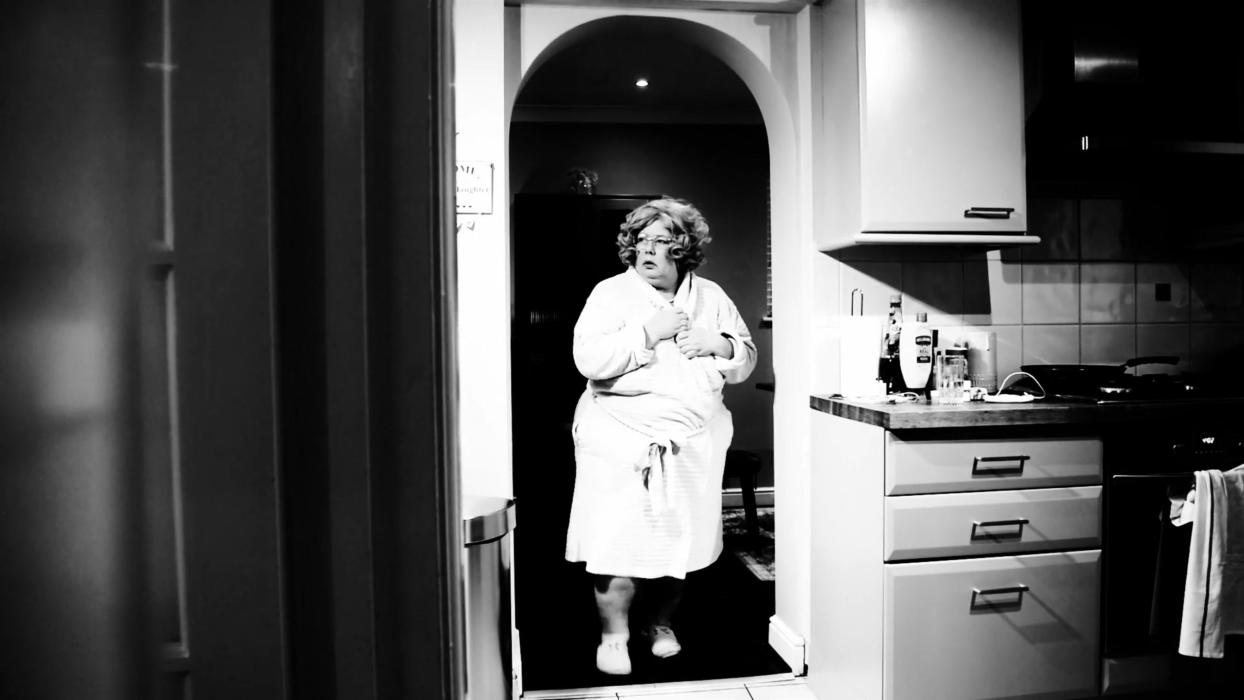
Delivered through an incredibly loose meta-narrative, The Benefactress: An Exposure of Cinematic Freedom is an avant-garde exploration of voyeurism in its most base form. The incessant debasing and sexual assault of the victim for the pleasure of the titular benefactress, Elektra McBride, as both a live stream attended by her and a recorded movie for her viewing pleasure afterwards, presents an unambiguous example of scopophilia.
As such, the film is undoubtedly meant for an audience of one, catering solely to the benefactress’s tastes. While there is an argument that the lack of a progressive narrative, or any tangible connection to traditional cinema, presents an elongated mess of awkward sex scenes, this is entirely intentional—designed to be an assault on the senses for the average moviegoer.
However, due to the nature of this highly experimental story (or lack thereof), The Benefactress: An Exposure of Cinematic Freedom suffers from serious pacing issues. While only 67 minutes in length, certain scenes begin to overstay their welcome quite early on—causing the film to languish around its midpoint.
Consisting of a blend of overly shaky handheld POV perspectives and some traditional static shots, the camera work plays a large part in the film’s design. Mostly representative of the director’s perspective (played by Guerrilla Metropolitana), the cinematography is as much a character in the film as the actors. Furthermore, numerous post-production effects have been added during editing. The addition of a faux 8mm film overlay over most of the sex scenes imbues a traditional feel of old-school stag films, short, silent, often illegal pornographic movies produced from the early 1900s to the late 1960s.
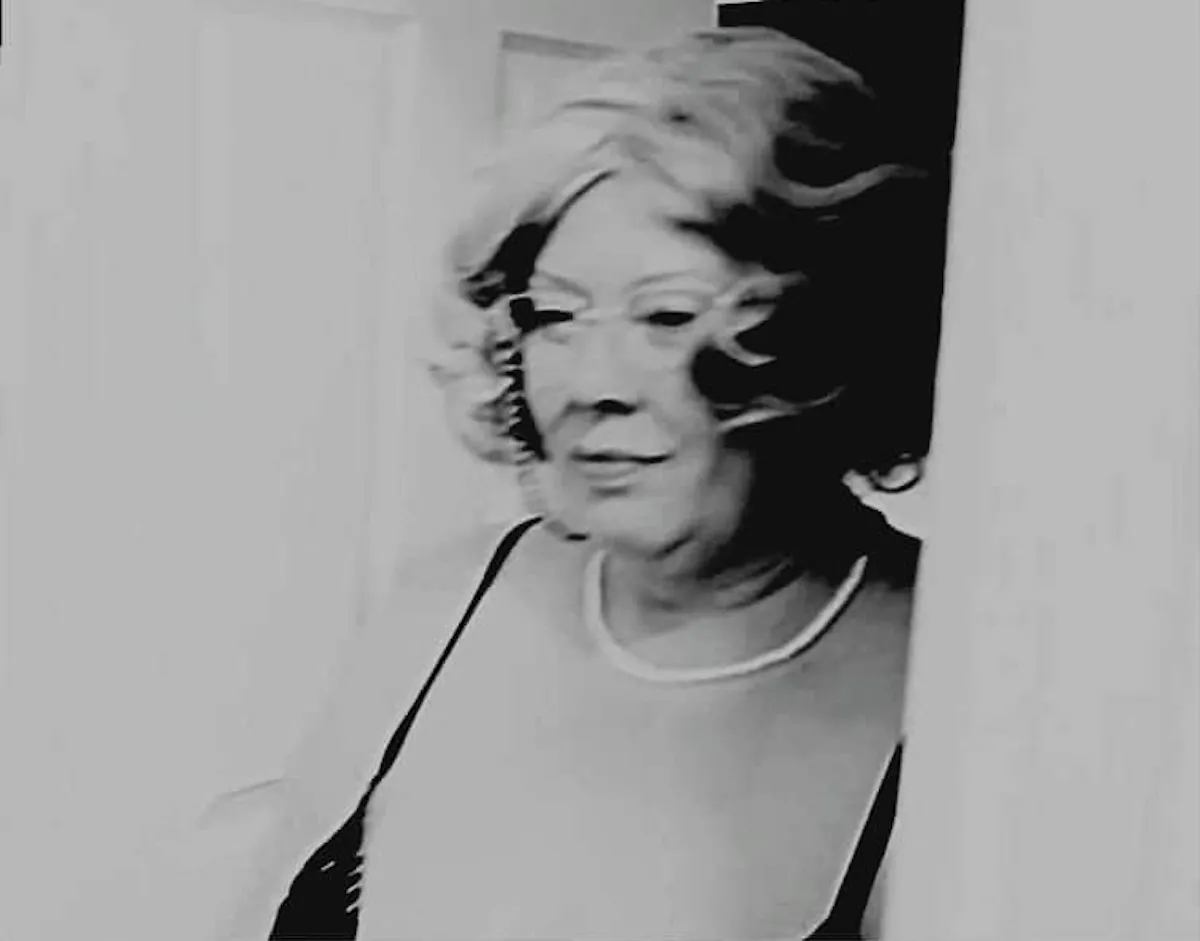
Additionally, numerous instances of ‘subliminal messaging’ are utilised during the film’s first half. Appearing for only a few frames, text relating to a scene, such as “Let’s shave her flower”, “She is Shaken” and “More Penetration” appear quick enough for them to be noticed, but not long enough to be discerned visually. Seemingly representing the director’s input/suggestion on what to do visually rather than verbally.
More of a sensory overload than a cinematic experience to be enjoyed, The Benefactress: An Exposure of Cinematic Freedom is a difficult film to categorise. While I understand and respect its artistic vision, its painfully slow pacing largely undercuts this aspect, making it hard to recommend to the average viewer. While there is undoubtedly an audience out there who would appreciate this type of film, it certainly isn’t the standard genre cinema fan—being a title of niche interest in the already esoteric genre of extreme cinema.

More Extreme Cinema
Kristin Dearborn’s 2024 novel Faith of Dawn is an unpredictable roller coaster that mixes crime drama with science fiction and fantasy elements and a good dose of horror to give… Having a roommate can be hard. Whether it’s disrespect of the kitchen cleaning rules or failing to remember how thin the average bedroom wall is, living with another person is… What’s up sickos. Felix here to give you my thoughts on the American Guinea Pig series. This continuation of the Japanese cult series comes courtesy of the fine folks at… The early days of film exploration were pretty wild, with the advent of VHS and early online access creating a community of people pushing filth. Consequently, certain films became a… When it comes to horror subgenres, body horror is, by far, the most impressive visually – the loss of bodily autonomy in the most horrendous and intimate way. As such,… Gorenography is a 2021 documentary hosted by director Tony Newton. The documentary delves deep into the world of extreme cinema, divulging an uncensored, unbridled look at this niche underbelly of…
Faith of Dawn (2024) Book Review – The Bigfoot Fic We Never Knew We Needed

2LDK (2003) Film Review – Killer Co-habitation in the Tiny Rooms of Tokyo

American Guinea Pig – A Heaping Dose of Carnage And Gore
Mai-Chan’s Daily Life (2014) Film Review – Extreme Graphic Depravity

11 Best Body Horror Anime Of The 80s & 90s – A Vessel For Visceral Visuals

Gorenography (2021) Film Review – A Conscientious Exploration of Extreme Cinema Directors

Hey there, I’m Jim and I’m located in London, UK. I am a Writer and Managing Director here at Grimoire of Horror. A lifelong love of horror and writing has led me down this rabbit hole, allowing me to meet many amazing people and experience some truly original artwork. I specialise in world cinema, manga/graphic novels, and video games but will sometime traverse into the unknown in search of adventure.