





A news personality shares the shocking story that the reptilian Deep State is using the basements of pizza places in satanic rituals involving children. With the government doing nothing– to be fair, probably because there’s no basement at the named pizza parlour– a reporter desperate for a big story recruits a member of a militia to help put a stop to this abuse of children once and for all.

This is a pretty tasteless subject matter, and that’s the whole point of The Pizzagate Massacre. An absurd, frequently slapstick, satire of how the media can whip people into a frenzy over nothing, using dodgy unverified sources as the basis assuming they sound exciting enough. A lot comes under fire here. From Alex Jones style “entertainment” news, to the second amendment, the elderly, conspiracy theorists, the wider state of journalism in new media; all to frequently disastrous results. But there’s a heart behind all this, sympathy is shown where sympathy is due and the real assholes are ultimately small in number.
Tinus Seaux plays an extreme caricature of a US survivalist, complete with an absurd Waco Massacre backstory, that has a surprisingly sympathetic portrayal considering such radical traits. He clearly wants to do the right thing, even if despite his best of intentions anything he tries to do to help seems to end in disaster. Alexandria Payne is also relatable in chasing her dreams tenaciously, no matter the consequences, with an admirable determination. They have very little in the way of effective agency, however, due to the bad faith players of the story. John Valley’s militiaman is hungry for power, and lacking understanding he’s the last person who should have any. A lot of the worst outcomes here are the result of his blundering combined with his refusal to take any responsibility for being a screw up. Lee Eddy’s not-Alex Jones will say anything for ratings, even to the point of surprising conviction in what they do despite how much harm it causes. From the inciting incident reporting on the conspiracy, their news show continues to only fan the flames further. The antagonists just have too much momentum behind them for the heroes of the piece to do much in defiance of events.

Since it’s an absurdist satire not above dick jokes as carefree vulgarity, you’re not in for much in the way of scares here due to such a casual context. The serviceable gore presented does offer some adequate shocks, although the gore is far from the focus. Although one may have a sense of a missed opportunity for messy fun, it’s instead adamant to drive home the comedy as the foremost priority. Positively, the humour is generally successful, this being their central goal. As the budget is small, the comedic focus is more than understandable. Focusing on witty banter and nailing a good punchline helps keep everything moving when there’s simply no budget available for big action set pieces anyway. Interestingly, the true horror here is definitely the state of modern media as a cruel reality, and they do not shy away from showing the ludicrous development of insane fringe culture into the mainstream. The final direction of The Pizzagate Massacre is all the more uncomfortable for how palpable the lack of hope feels.
This is a timely, if at times tasteless, satire that might even do some good if it reaches the right people, although it is clearly content to misbehave for pretty cheap laughs at times. Regardless, there’s more heart here than the concept would suggest, making this an oddly deep vessel for slapstick satire.
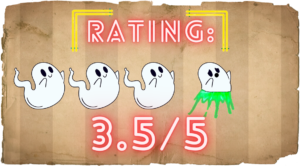
We watched The Pizzagate Massacre as part of our Grimmfest coverage.
More Festival Coverage
I had the great fortune of viewing the documentary Satoshi Kon: The Illusionist (2021) at this year’s Nightstream horror film festival. As a longtime fan of his work it turned out… A song that instantly comes to mind, given the title and questions posed in Dog God (1997), is Pink Military’s “Do Animals Believe in God,” which asks, “Do you, do… Hailing from a dead-end suburban neighborhood in Northern Illinois, a group of friends have taken to idolizing the show Jackass and are eager to make their own version; calling it… Door is a 1988 Japanese psychological horror thriller written and directed by Banmei Takahashi with additional writing from Ataru Oikawa. Beginning his career in Pinku Eiga in the 70s, Takahashi… Raging Grace outlines the exploitation and fetishisation of undocumented immigrants whilst simultaneously celebrating distinctive Filipino traditions and cultural heritage. Paris Zarcilla’s incisive directorial debut follows single mother Joy as she… Ghost Killer is a 2024 Japanese action crime film written by Yugo Sakamoto and directed by Kensuke Sonomura. Sonomura is mostly known for his work as a stuntman, stunt coordinator,…
Satoshi Kon: The Illusionist (2021) Film Review: A Short Life with Immeasurable Impact

Dog God (1997) Film Review – Do You Believe in Dog? [Fantastic Fest]

Flesh Games (2023) Film Review – An Escalating Game of Cruelty [Unnamed Footage Festival 7]

Door (1988) Film Review – Home Invasion J-Horror [Fantastic Fest]

Raging Grace (2023) Film Review – Horror and Social Commentary in Unsettling Harmony [FrightFest]

Ghost Killer (2024) Film Review – Revenge with a Twist [Fantastic Fest]

Luke Greensmith is an Editor at the Grimoire of Horror and an active folklorist as well as working in film across a few roles. While this can cover quite a wide range of things, he’s a dedicated horror fan at heart and pretty involved with horror communities both online and local to him. You can find their folklore work on the Ghost Story Guys Podcast, their own LukeLore podcast, and accompanying the artist Wanda Fraser’s Dark Arts series as well as on the Grimoire of Horror itself.