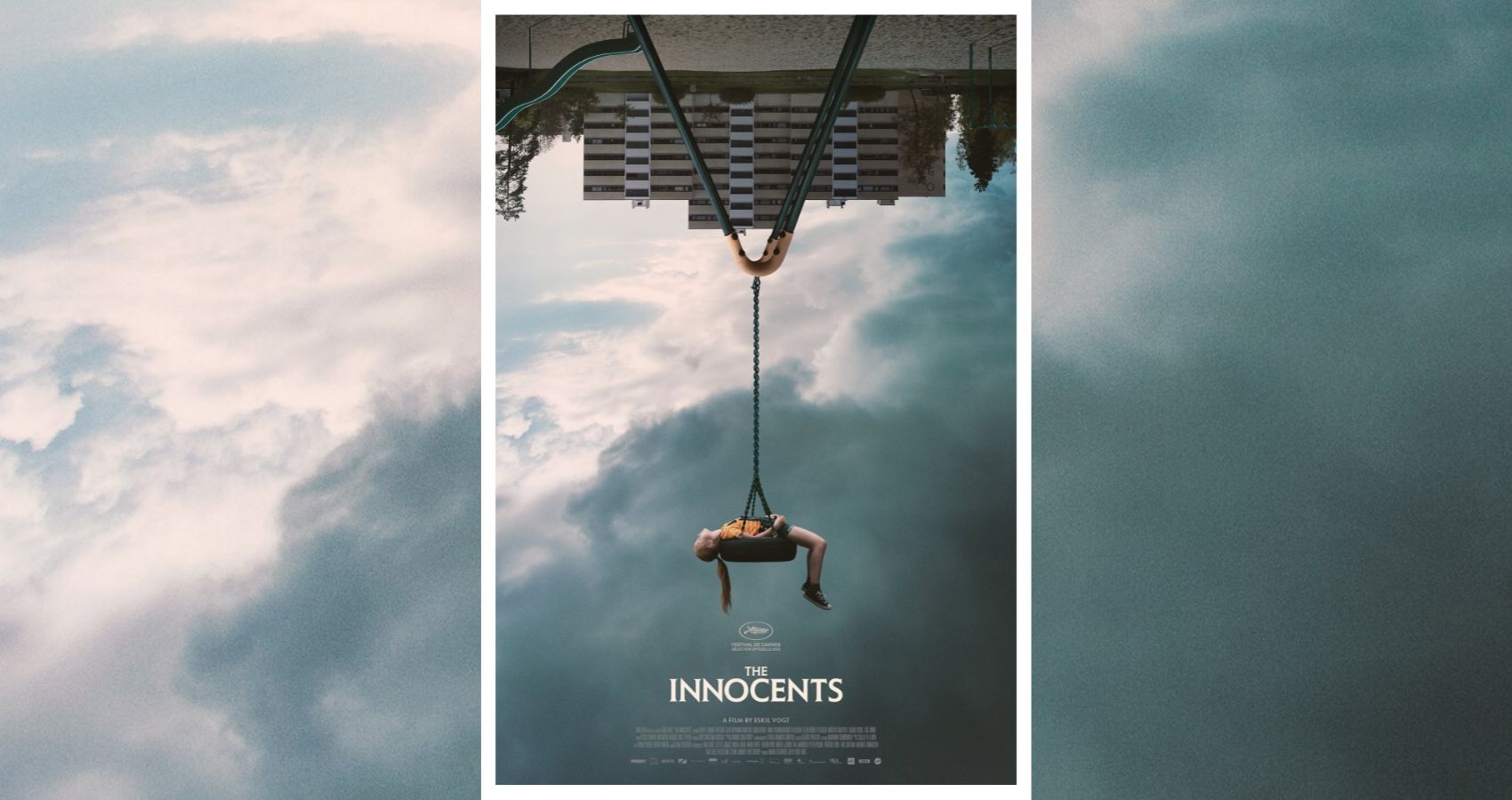





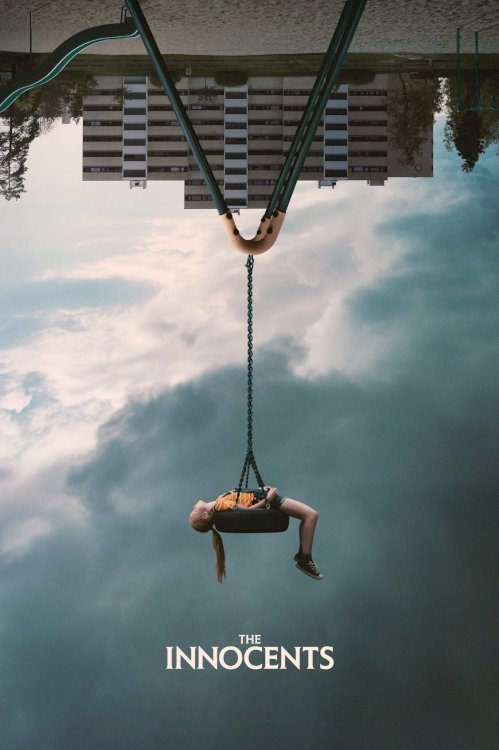
Evoking youth in serious horror narratives will always touch a soft spot for many; however, The Innocents not only brings a frightening scenario upon a small group of children, it captures the wonderment and confusion that comes in youth with stark realism. Norwegian filmmaker, Eskil Vogt, has developed a cult following outside of Norway for his work on “Thelma” and “Oslo, August 31st”, yet The Innocents marks only his second feature length film with him in the director’s seat for full authority. An impressive accomplishment, nevertheless, considering The Innocents serves as amongst the most challenging films of 2021 while also existing as one of the masterfully crafted cinematic experiences for the year.
Having moved into a new housing complex, a family with two young daughter (one with severe autism) learn that some of the children in the building have psychic abilities. A group of four kids, including the two sisters, begin to experiment and expand on their abilities, subsequently discovering an unparalleled power. However, the confusion of youth and such responsibility proves deadly for some, and a tool of revenge for others.
For a production that is light on graphic violence, The Innocents finds a way to crawl under the viewer’s skin and make the slightest aggressions hold immeasurable weight. One of the more pronounced methods rests in Vogt’s honest portrayal of youth as generally lost and confused – trying to find their place in the world. Issues of casual animal abuse, ignoring personal health and lashing out with emotions that have yet to be defined acting to show the innocent nature of the characters – the power they receive both a cause for wonderment but ultimately an evil presence that leads to chaos. Here, the horror comes not so much from the children themselves, rather the power given to those who can’t handle it.
This is highlighted in the films most unsettling instant of child exacting revenge on a parent, accosting them in a simple and slow manner that feel apt- there are no flying knives or morbid sensational imagery. In this case, the dropping of boiling water over the legs of an unconscious woman becomes deeply sinister as the kid looks on with a cold indifference. There is a deeper sense of malice as the psychic abilities develop, but as a test in the damage that can be done it suits the morbid playfulness of experimenting with obscene power.
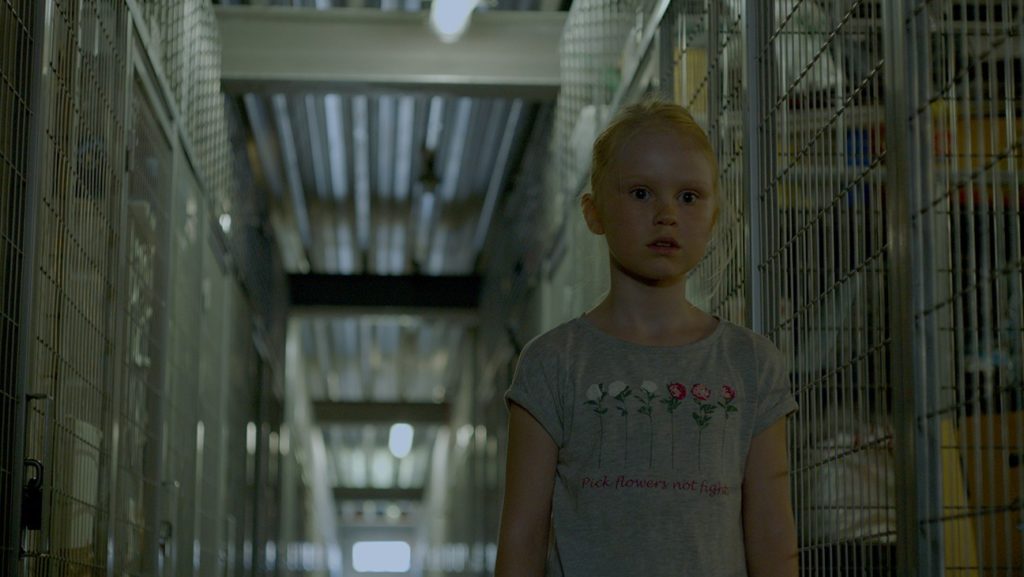
Visually, the film moves at a pace afforded to youth wherein days stretch on and they are afforded open exploration that comes with carefree wandering. The compound where the film takes place has its own sense of community, feeling secluded from the rest of the world. This gives the open space and oddly claustrophobic feeling as the kids turn on each other and the large expansive space closes in whilst they learn to cast their abilities across buildings. Overall, the narrative and visuals masterfully build into the uncanny horror, making what little there is resonate a profound sense of dread.
The performances from the young cast is admirable, particularly their ability to deal with heavier themes and implied trauma. Under the guidance of Vogt, the viewer feels like they are intruding in on the kids world as the experience becomes wholly immersive in the director’s dedication to capturing a realistic vision of youth. Getting such an immersive experience from child actors is always a hard task, but Vogt and the young performers work together to make a realistic portrait of childhood wonderment and horror.
The Innocents demand the patience of the viewer while subsequently offering little in the way of sensationalism that will cater to fans of more fast paced and violent horror. Best described as upsetting over ‘scary’, it is not a conventional experience and it audience will be limited to those who have the patience and commitment to worldbuilding over abject horror. To the right audience, those who can appreciate the nuanced approach, Eskil Vogt The Innocents is a masterpiece.
More Film Reviews
Set during World War II, Kiah Roache-Turner’s Beast of War (2025) follows a battalion of young Australian soldiers as they prepare for their first deployment. Focusing primarily on Leo, played… Like all genres, horror owes much of its success to a handful of tropes that can be worked and reworked time and again. Two popular examples are the slasher archetype… Set to screen at the 2021 Fantasia Film Festival, Story of a Southern Islet rests as Malaysia’s only entry into the prestigious festival. Having found myself intently interested on the new… The latest addition to Shudder’s original collection has fans highly polarized. Set in a remote luxury villa, with scenes many movie fans will recognize from the California desert, it’s a… In 2017, the United States Air Force carried out an airstrike in the Nangarhar Province, Afghanistan. Deploying the largest non-nuclear bomb in their arsenal (the MOAB), they aimed to destroy… The term “remake” is often met with blatant vitriol and is usually accompanied by assertions that Hollywood is either running out of ideas or is cashing in on the audience’s…![Beast of War (2025) Film Review – Shark or a Bullet? [Fantastic Fest 2025]](https://www.grimoireofhorror.com/wp-content/uploads/2025/09/Beast-of-War-cover-365x180.jpg)
Beast of War (2025) Film Review – Shark or a Bullet? [Fantastic Fest 2025]
Behind the Mask: The Rise of Leslie Vernon (2006) Film Review – Constructing a Slasher

The Story of Southern Islet Film Review – A Curse On You!

The Seed (2022) Film Review – A Glitzy Shudder Original
The Lair (2022) Film Review | Toronto After Dark Film Festival

Cube (2021) Film Review – Japan Beat Hollywood to the Punch